Archives for category: BHFOTD

Hi Guys!

Most of you know that in previous years, I bullied my sister into writing some of these BHFOTDs with me.
Because I’m lazy.
But this year my sissie got a BIG! FANCY! PROMOTION!
So she’s busier than a one legged man in an ass kicking contest. Or so she says.
I thought supervisors just sat around telling other people what to do?
No? Fine.
This year I’m gonna give her a pass, but I’m gonna “respectfully” suggest that she figure out a way to get it together for next year.

THIS IS MY SISSIE NEW PEOPLE.
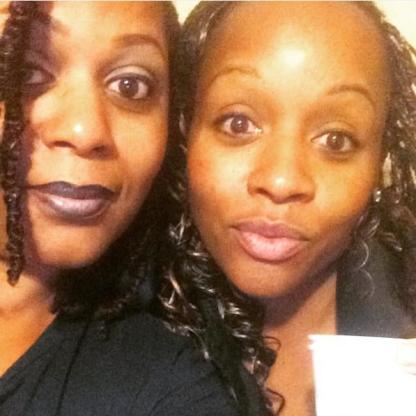
seesters
[She cute]

If you see her in the street, leave her alone! Because she knows ju jitsu and will probably kick your ass, Stranger Danger.
Or say hi and ask for a BHFOTD. Choose your own adventure and all that.

MOVING ON.
I was ALLLL set to write about something else entirely when my sissie’s birthday twin passed away yesterday.
Did you guys know that Nisha shared a birthday with Maurice White, lead singer of Earth Wind & Fire?
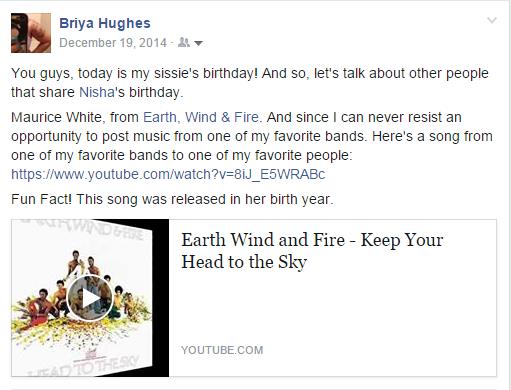
nisha bday
You can see what a joy it is to be related to me.

ANYWAYS.
Back to Maurice. He was the founder of the band Earth, Wind & Fire. He was also the older brother of current Earth, Wind & Fire member Verdine (VERDINE!) White, and former member Fred White.
With Maurice as the bandleader and producer of most of the band’s albums, EWF earned legendary status winning six Grammy Awards out of 14 nominations, an NAACP Hall of Fame Award, a star on the Hollywood Boulevard Walk of Fame and four American Music Awards and the sale of over 90 million of the group’s albums worldwide.

As a member of the band, Maurice was bestowed with such honors of being inducted into the Rock and Roll Hall of Fame, the Vocal Group Hall of Fame, The Songwriters Hall of Fame and The NAACP Image Awards Hall of Fame.

Maurice White and EWF will also go down in Black history as the first African American band to sell out Madison Square Garden.

White has been called “an innovator” and “someone who has had a profound impact upon the music industry as a whole” by Chaka Khan, and has been cited as a main influence by artists such as Bilal and Lenny Kravitz (NSFW. NOT SORRY).

Lest you think this is some doom & gloom obituary type fact of the day, I have a fun fact!
Nisha & Maurice were not only birthday twins.
Nisha was only a few degrees of separation from Maurice White.

Maurice White composed As One which was performed by Memphis Bleek (Jay-Z’s The Blueprint2: The Gift & The Curse)
Memphis Bleek recorded Hood to Hood with Ras Kass.
Ras Kass used to date … YOU GUESSED IT! My Sissie!
That’s all for this week folks. I get weekends off!
Stay tuned next week for “What does Briya have to say about Black People?”

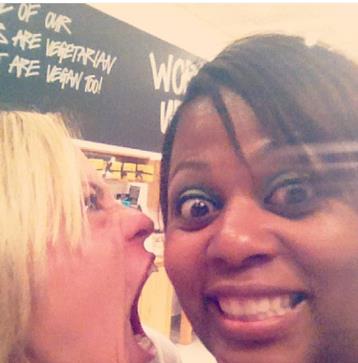
Mostly because when I go out alcohol is involved.
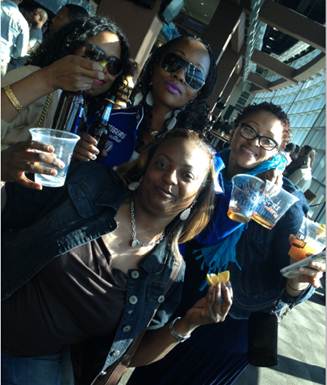
Then my phone gets drunk and I’m looking back at my pictures
like… WHAT IS GOING ON HERE?

blurry
[I’m sure it’s only a coincidence* that Monica is in both of these pictures when my phone is drunk]

And then I remember: Whiskey. My phone enjoys whiskey.
Also. My subjects are uncooperative. Ahem.

megan
[Hi, Megan!]

Luckily I have a day job.
[No you guys, this isn’t my day job either. Even though y’all be acting like it, this is just an entertaining side gig]

But THIS GUY.
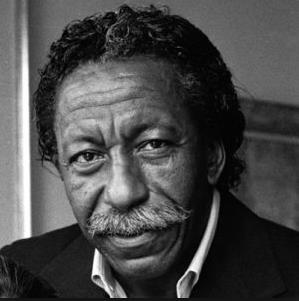
Gordon Parks
[guessing prolly not a selfie]

This gentleman is Gordon Parks.
Gordon Parks purchased his first camera at the age of 25 after viewing photographs of migrant workers in a magazine.
His early fashion photographs caught the attention of Marva Louis, wife of the boxer Joe Louis, who encouraged Parks to move to a larger city. Parks and his wife relocated to Chicago in 1940.
He became interested in the low-income black neighborhoods of Chicago’s South Side. In 1941, Parks won a photography fellowship with the Farm Security Administration for his images of the inner city. Parks created some of his most enduring photographs during this fellowship, including “American Gothic, Washington, D.C.,” picturing a member of the FSA cleaning crew in front of an American flag.

After the FSA disbanded, Parks continued to take photographs for the Office of War Information and the Standard Oil Photography Project. He also became a freelance photographer for Vogue
Relocating to Harlem, Parks continued to document city images and characters while working in the fashion industry. His 1948 photographic essay on a Harlem gang leader won Parks a position as a staff photographer for LIFE magazine, the nation’s highest-circulation photographic publication.

He became the first African-American photographer for both Life and Vogue magazines.

Parks held this position at Life for 20 years, producing photographs on subjects including fashion, sports and entertainment as well as poverty and racial segregation.

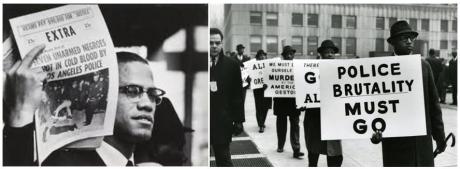
malcolm
[WOW. IT’S ALMOST LIKE THESE PICTURES COULD HAVE BEEN TAKEN YESTERDAY]
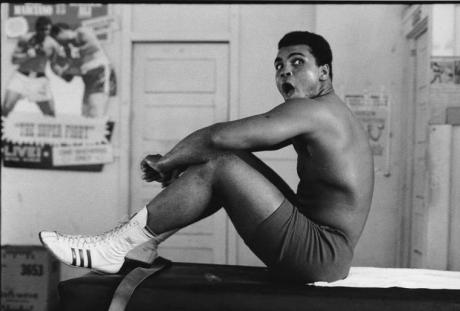
He was also took portraits of African-American leaders, including Malcolm X, Stokely Carmichael and Muhammad Ali.

ail
[I love photos of Muhammad Ali. Really I do]

In 1969, Parks became the first African American to direct a major Hollywood movie, the film adaptation of The Learning Tree. He wrote the screenplay and composed the score for the film.
His next film, Shaft, was one of the biggest box-office hits of 1971, inspiring a genre of films known as Blaxploitation. His attempt to deviate from the Shaft series, with the 1976 Leadbelly, was unsuccessful. Following this failure, Parks continued to make films for television, but did not return to Hollywood.

He would go on to publish a number of books throughout his lifetime, including works of fiction, volumes on photographic technique, several memoirs and retrospectives as well,
including A Choice of Weapons. Which is COMPLETELY different from Weapon of Choice. Go figure.

*coincidence. As in she is probably the reason that my phone can’t even see straight.

So lemme tell y’all something. We used to live in Boston.
And one year I sprung for ridiculously expensive tickets at the Garden for a Lakers (or Celtics, I guess if you’re from BAHSTON) game.
My husband is a shit talker from a long line of shit talkers.
You guys. I was pretty sure we were gonna get jumped before the end of the game.
That the Lakers won.
BUT.
Eventually the people sitting in our section realized it was all in good fun.
Plus they respected LA fans from LA repping their home team. Whew.

ANYWAYS.
As we were wandering to the exit, we were looking at all the memorabilia on our level.
I can say a LOT of things about the Celts (but I won’t because I’m being nice for a change)
But they have HISTORY. Lots of it.

Including Bill Russell. Boston Celtic. Birthday Boy. And Kappa Man.
(Y’all. This was the fact I wanted to give y’all for their Founder’s Day, but didn’t because not only is this an awesome BHFOTD. It’s his birthmonth!)
(I coulda waited for his birthday next Friday, but I didn’t. BECAUSE I DO WHAT I WANT)


*clears throat and pushes up glasses*

Bill Russell played center for the Boston Celtics from 1956 to 1969. A five-time NBA Most Valuable Player and a twelve-time All-Star, Bill has eleven (11!)NBA championships during his thirteen-year career.
He also holds the record for the most championships won by an athlete in a North American sports league.
(This does not include the only other person who did it because 1) It’s hockey and 2) He’s white and this is not White History Month )

He was the first African American player to achieve superstar status in the NBA. He also served a three-season (1966–69) stint as player-coach for the Celtics, becoming the first African American NBA coach
For his accomplishments in the Civil Rights Movement on and off the court, Barack Obama awarded him the Presidential Medal of Freedom in 2011.

Russell is one of only seven players in history to win an NCAA Championship, an NBA Championship, and an Olympic Gold Medal. He was inducted into the Naismith Memorial Basketball Hall of Fame and the National Collegiate Basketball Hall of Fame.
He was selected into the NBA 25th Anniversary Team in 1971 and the NBA 35th Anniversary Team in 1980, and named as one of the 50 Greatest Players in NBA History in 1996, one of only four players to receive all three honors.

In 2009, the NBA announced that the NBA Finals Most Valuable Player trophy would be named the Bill Russell NBA Finals Most Valuable Player Award in honor of Russell.
The following day, during halftime of the All-Star game, Celtics captains Paul Pierce, Kevin Garnett, and Ray Allen presented Russell a surprise birthday cake for his 75th birthday.(Awwwww)
Russell attended the final game of the Finals that year to present his newly christened namesake award to its winner, Kobe Bryant, Los Angeles Laker.
Y’all didn’t really think I wouldn’t figure out a way to bring this back around to my home team did you?

*closes wikipedia tab*
*Being at a basketball game is less horrifying when I’m seated in a place where there is NO WAY I will run into a basketball player.
**Relatedly: A LOT OF TALL PEOPLE REALLY LOVE BASKETBALL. [screams internally]

BUT.
I and (some of) my co-workers have a terrible habit of nicknaming people at work.
And I have to say, we’re pretty good at it.

How did they get these names? WELL. LET ME TELL YOU A STORY.

SO THIS ONE TIME AT BAND CAMP WORK…
This Jackass at work called himself reprimanding me ‘cause some random patient couldn’t reach me on the phone
because apparently I’m just a robot who is not allowed to get up from my desk to go pee. Or fetch files. Or ANYTHING.
ANYWAYS. He tells this person that if he can’t reach me again to contact him and he’ll make sure I do my job.

And I did what any professional would do:
I went to my actual boss and told on him.
And because she’s awesome, she set up a meeting with me, him and HIS boss.
In this meeting, I let him know in no uncertain terms that he ain’t shit, and he ain’t never gon’ BE shit.
And if he has a problem with me he needs to TAKE IT UP WITH MY BOSS.
At which point he starts tap dancing and beat boxing because “pfft…uhhh…He would never PRESUME…”
Some of y’all don’t really know me, so take note. I am never here for the BS.
And I believe in clapping back in the most professional way possible. With a smile. At work.
Catch me in the street and please believe these hands are rated E for Everyone.

After that, whenever I was talking about him I called him Bojangles.
(related: I had no idea there was a video)
(also you should maybe not click that if you’re still at work)

He DEFINITELY was not as awesome as Bill “Bojangles” Robinson. (TA-DAAAAA!!)
Bill Robinson was the best known and most highly paid African American entertainer in the first half of the twentieth century.
His long career mirrored changes in American entertainment tastes and technology, starting in the age of minstrel shows, moving to vaudeville, Broadway, the recording industry, Hollywood radio, and television.
He is best known today for his dancing with Shirley Temple in a series of films during the 1930s, and for starring in the musical Stormy Weather (1943), loosely based on Robinson’s own life, and selected for preservation in the National Film Registry.
Robinson used his popularity to challenge and overcome numerous racial barriers, including:

• one of the first minstrel and vaudeville performers to appear without the use of blackface makeup
• one of the earliest African American performers to go solo, overcoming vaudeville’s two colored rule (One black is not enough. Three blacks is TOO GD MANY)
• a headliner in the first African-American Broadway show, Blackbirds of 1928
• the first African American to appear in a Hollywood film in an interracial dance team (with Temple in The Little Colonel)
• the first African American to headline a mixed-race Broadway production

During his lifetime and afterwards, Robinson also came under heavy criticism for his participation in and tacit acceptance of racial stereotypes of the era, with critics calling him an Uncle Tom figure. Robinson resented such criticism, and his biographers suggested that critics were at best incomplete in making such a characterization, especially given that Hollywood has a history (and a present) of only offering African Americans VERY SPECIFIC types of roles (I mean…how do you think they keep the #OscarsSoWhite?)

Also. In his public life Robinson led efforts to:
• persuade the Dallas police department to hire its first African American policemen
• lobby President Roosevelt during World War II for more equitable treatment of African American soldiers
• stage the first integrated public event in Miami, a fundraiser which was attended by both black and white city residents

Robinson is remembered for the support he gave to fellow performers, including Fred Astaire, Lena Horne, Jesse Owens, and the Nicholas brothers.
Any tap dancer worth his tap shoes credits Bill “Bojangles” Robinson as an influence.
AND! In 1989, the U.S. Congress designated May 25, Robinson’s birthday, as National Tap Dance Day.

Which is completely different that my ex-coworker Bojangles.
Who ended up getting fired for biting another co-worker on the job.
Until tomorrow!

So a couple of years ago, I wrote this for my Dad’s birthday.
Happy Birthday Daddy!
(And Nisha Bisha – tomorrow!)
(And Mommy – Sunday!)

But. This morning I was told that today’s Google Doodle was a BHFOTD.
And WHAT A COINCIDENCE, I had this one about this self same person laying around.

SO.
How about a look into my family tree?

My Dad has 2 girls and 2 boys.
And only the girls had boys.
And the boys (BOY, actually. Only one of my brothers has kids) have girls.
Also, the girls are done having kids.
So I guess it’s on the boys to make us sommore McDuels.

Really, just my baby brother. Because I’m pretty sure that if my little brother tries again for a boy he’ll probably have TWINS that will also be girls for his trouble.

This has nothing to do with anything except for the fact that today’s my Daddy’s Birthday!

And what better way to commemorate my Dad’s birthday than with a Black History Fact of The Day (BHFOTD)?
*AHEM*

On THIS day in 1862, Ida B Wells was born a slave in Holly Springs, Mississippi just before President Abraham Lincoln issued the Emancipation Proclamation. Wells-Barnett became a prolific social activist and champion for the right of African-Americans. She was also a founding member of the NAACP.

In March 1892 a white mob invaded her friends’ (Thomas Moss, Calvin McDowell, and Henry Stewart) store because was seen as competitive with a white-owned grocery store across the street. During the altercation, three white men were shot and injured. Moss, McDowell, and Stewart were arrested and jailed. A large lynch mob stormed the jail and killed the three men.

The murder drove Wells to research and document lynchings and their causes. She began investigative journalism, looking at the charges given for the murders. She officially started her anti-lynching campaign. She spoke on the issue at various black women’s clubs, and raised more than $500 to investigate lynchings and publish her results. Wells found that blacks were lynched for such reasons as failing to pay debts, not appearing to give way to whites, competing with whites economically, being drunk in public, walking down the street with a pack of skittles and an iced tea, jaywalking, switching lanes without using a blinker (WAIT. WHAT?). She published her findings in a pamphlet entitled “Southern Horrors: Lynch Laws in All Its Phases.”

Wells received much support from other social activists and her fellow clubwomen. In his response to her article in the Free Speech, Frederick Douglass expressed approval of her work: “You have done your people and mine a service…What a revelation of existing conditions your writing has been for me.” (Freedman, 1994). Wells took her anti-lynching campaign to Europe with the help of many supporters. In 1896, Wells founded the National Association of Colored Women, and also founded the National Afro-American Council. Wells formed the Women’s Era Club, the first civic organization for African-American women. This later was named the Ida B. Wells Club, in honor of its founder.

Wells spent the latter thirty years of her life in Chicago working on urban reform. She also raised her family and worked on her autobiography. After her retirement, Wells wrote her autobiography, Crusade for Justice (1928).

She never finished it; the book ends in the middle of a sentence, in the middle of a word. Wells died of uremia (kidney failure) in Chicago on March 25, 1931, at the age of sixty-eight.

An aside: I don’t usually post my random BHFOTDs because y’all get a solid month of black people shit in February. And these are the ones I send when I feel like it. Because it’s Tuesday. Or I am avoiding doing work stuff. Or maybe I have something to say and you just have to be paying attention. But NOT TODAY! Today, we’re talking about a lady who chose to expose lynchings of her people in a time where it was pretty much acceptable to do to people whatever they wanted because even though black people were free they were still considered insignificant and not really people, so what’s the big damn deal because it’s not like people are still killing black folks with no consequence, right? has the same birthday as my Daddy.

Because it’s flat on one side
(That’s right, random songs because WHY NOT!)
Briya here! So this time *I* am not the one still talkin’ about the Oscars. My Sissie is. So please to enjoy Nisha’s contribution to Let’s Talk About Black People Month.


They say that people don’t move when they see smoke, but when they feel the fire. So, Bri gets her wish and you get your BHFOTD. (FINALLY. JAYSUS – B.)

I was so enraged over the recent ignorant statements of E Online correspondent/Fashion Police host(/Lollipop looking*) Giuliana Rancic that I was motivated to write about it.
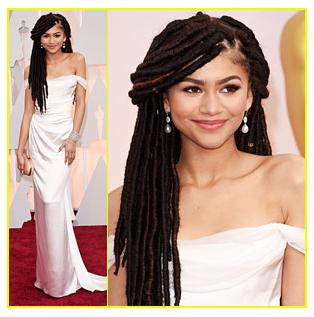
zendaya
This is 18 year old Disney Star Zendaya. Apparently she smells like patchouli and weed.
Zendaya could not have handled the situation more eloquently for a young lady. In case you haven’t noticed, many Black women are choosing to go natural.
Unfortunately, what comes with the territory also includes stereotyping and judgments by our white counterparts.
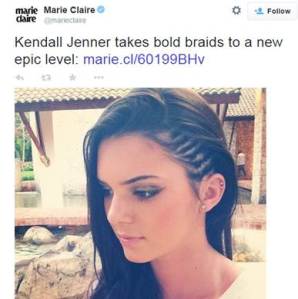
Unless of course, THEY appropriate styles normally seen on people of color. Then it’s BOLD. And Epic. And Epically Bold.KJ Braids

On black folks, it’s ghetto. OH.

In the 1960s, natural Black hair was transformed from a simple expression of style into a revolutionary political statement. It became a fundamental tool of the Black movement in America, and hair came to symbolize either a continued move toward integration in the American political system or a growing cry for Black power and nationalism.” Prior to this, the idealized Black person (especially Black women) “had many Eurocentric features, including hairstyles.” However, during the movement, the Black community endeavoured to define their own ideals and beauty standards and hair became a central icon which was “promoted as a way of challenging mainstream standards regarding hair.” During this time, black hair “was at its height of politicization,” and wearing an Afro was an easily distinguishable physical expression of black pride and the rejection of societal norms.[

Black militants and members belonging to the movement perpetuated the idea that straightening one’s hair, whether chemically or with the use of heat, was an act of self-hatred and a sign of internalized oppression imposed by White mainstream media. At this time, a Black person’s “ability to conform to mainstream standards of beauty [was] tied to being successful.” Thus, rejecting straightened hair symbolized a deeper act of rejecting the belief that straightening hair and other forms of grooming which were deemed ‘socially acceptable’ were the only means of looking presentable and attaining success in society. The pressing comb and chemical straighteners became stigmatized within the community as symbols of oppression and imposed White beauty ideals. Blacks sought to embrace beauty and affirm and accept their natural physical traits. The ultimate goals of the Black movement was to evolve to a level where Black people “were proud of black skin and kinky or nappy hair. As a result, natural hair became a symbol of that pride.

Natural
Deja vu anyone??
THE STRUGGLE IS REAL
*My sissie would NEVER call Giuliana a lollipop (Big ol’ head, stick body). I would. Because I am petty.

**ALSO – YEAH THAT’S RIGHT. I SURE DID ADD A PICTURE OF MYSELF.
You’re welcome guys! LOLOLOL

Actually, I don’t. I mean, I LIKE IT. But I don’t LOVE it.
No. We’re not talking about football. ‘Cause I do sorta love football.
I’m talking about basketball. KINDA.

The All-Star weekend was this weekend!
And I missed MOST of it. But I didn’t miss this:
Kevin Hart getting’ schooled by 13 year old Mo’ne Davis at the Celebrity Basketball game.
DAAAAMN son.

It was in New York. And, I don’t know if you know this, but it was DAMN COLD in New York.
I mean…I don’t think it was Boston cold, but JEEZ.
Boston is currently so cold it’s making the news.
But we are NOT talking about Boston having the snowiest month in history.
We’re talking about New York news. HISTORY if you wanna get technical.
BLACK HISTORY if you wanna be exact. And I do. OBVIOUSLY.

Did you know that TODAY in 1951, New York City Council Passes Bill Prohibiting Racial Discrimination in Public Housing Developments? The bill was directed mainly at the Stuyvesant Town housing project, which was a public-private partnership project owned by the Metropolitan Life Insurance Company and the City of New York.

(Imagine that: An insurance with a history of discrimination dating back to when it was called National Union Life & Limb and was insuring Civil War soldiers AND The City of New York that EVEN TODAY IN 2015 unfairly targets African Americans under the “Stop-and-Frisk” policy* were being discriminating against black folks. Who’da thunk it?).

Managers of the housing development prohibited African American tenants and dispossessed residents who had been active in the campaign to end racial discrimination. Lawsuits were filed on the basis that the project was public- or semi-public, and violated anti-discrimination laws for New York City public housing, which were rarely enforced.

One month later, the Brown-Issacs Bill became law in New York City, making racial discrimination in public housing developments a misdemeanor offense punishable by a fine and prison term for the owner of any housing development constructed with public assistance to discriminate on account of race, color, or nationality.

And everybody lived happily ever after.

OR. Maybe 50+ years later on a different coast, in 2003, the Housing Rights Center of Los Angeles filed a housing discrimination case against Donald Sterling on behalf of 18 tenants. The lawsuit featured several racist statements allegedly made by Sterling to employees. While the final terms for the plaintiffs were confidential, the settlement obtained by the plaintiffs against Sterling was one of the largest of its kind and the public benefit terms were significant and wide-ranging.

AND THEN, In 2006, the U.S. Department of Justice then sued Sterling for housing discrimination for using race as a factor in filling some of his apartment buildings. In November 2009, ESPN reported that Sterling agreed to pay a fine of $2.7 million to settle claims brought by the Justice Department that Sterling engaged in discriminatory rental practices against Hispanics, blacks, and families with children.

But I was sorta talking about basketball, wasn’t I?
WELL. My BLACK History FOTD was about New York. And how it’s (still) racist.
But I’m feeling generous, because it’s President’s Day and I’m mad I have to work and y’all don’t
AND I know how some white folks get all riled up because THEY DON’T HAVE A WHITE HISTORY MONTH.
AND since now we have both white AND (one) black Presidents
I’ll also leave you with this White History fact.

In 2014, Donald Sterling became the first white owner of a basketball team who was stripped of his ownership and banned from the NBA fo’ life.
For being a racist who got caught being racist.

Just like that I brought it full circle. Like a basketball.

*Since nobody has developed a sarcasm font, I’m just gonna designate COMIC SANS. Because you can’t be taken seriously AND also use comic sans. You can do one or the other. But not both.

TSU 2012

Nisha (MY SISSIE!), George, (Char)Maine, Cricket. Hey Now!
This would be TSU Homecoming 2012.

I started goin’ to my sissie’s Tennesee State homecomings back when she was a student.
And kept goin’ back because DAMN. That’s how you get live, y’all.
I enjoyed it so much that I insisted our cousin who went to ‘SC go because, sorry USC, THAT is not a homecoming.

TO BE FAIR, I suppose. At USC you go for the football.
And at HBCUs, it’s all about the Band.
I mean, yeah..all Colleges/Universities have bands, but HBCU GOT BANDS THAT MAKE YOU DANCE
(I promise that’s not Oscar winner, Juicy J guys. It’s safe to click)

ANYWAYS. Since we’re talking about HBCU bands, and we are, let’s talk about sommore black history. ‘Cause it’s still February.
In the US, black marching bands formed as part of the military with the earliest musicians being fifers, drummers, trumpeters and pipers in Colonial-era militias.
Historians believe that nearly 5,000 Blacks were integrated in the pre-revolutionary war military as musicians, because most units banned black, mulattos, or native Americans in the military from bearing arms.
(AAHAHAHAHAHAHAHAHAHAHAHAHAHA….*deep breath* HAHAHAHAHAHAHAHAHAHA *cough*…. I wonder why?)

By the end of the Civil War, there were 185,000 black men inducted into the army as “United States Colored Troops”. Many would stay on after the war to form the first black units, while others went on to play in civilian bands.
Marching Bands had become integrated into the American Society by the late 19th century, including the first permanent black Minstrel troupes with one led by W.C. Handy.
These black Minstrel groups helped disseminate African-American styles of music and dance across the country.

Between 1880-1910 there were about 10,000 bands in the US, with many of them being Marching Bands. This was also the case in the African-American Community, especially in New Orleans, where black bands helped to raise money for numerous causes. Additionally, there was a rise in rural, self-taught bands that were strongly rooted in gospel and secular music- they basically replaced the voice using their instruments. Much of the music of these bands was characterized by offbeat phasing, polyrhythms, melodies and countermelody, syncopation and call-and-response patterns; all of which are hallmarks of other forms of African-American vernacular music. By the turn of the century, these bands were firmly established in New Orleans, the birthplace of jazz and the blues.

During World War I, many black military units again had military bands. Upon their return to the US in 1919, many of these musicians went on to join the faculty of the budding music departments of black college and universities.
These bands were initially formed at these historically black colleges to help raise money. Traditionally, many of these marching bands were linked to the ROTC and supported by the athletic department. The first marching band to deviate the military drill type formations was the University of Illinois band, who formed letters, words and intricate patterns on the field while playing in 1905. Their band director, Albert Austin Harding is considered a pioneer of the modern marching band.

Likewise at HBCUs numerous faculty set up the foundation for the modern black marching bands, including Major Nathaniel Clark Smith, the first officially titled Band Director at an HBCU. AND. W.C Handy, who joined the faculty at Alabama A&M leading to the adoption of the minstrel band style into HBCU bands. By the 1960’s, HBCU marching bands had developed a distinctive performance style and tradition which will have folks who didn’t even GO to an HBCU harassing you to find out when is your next homecoming so they can be down there boogying with the band. And also drinking. Because it’s time to GET GEEKED Y’ALL, IT’S HOMECOMING WEEK, which means the Alpha Day party right after you leave the Battle of the Bands, WHICH ALSO MEANS DAY DRINKING. And football. I’m pretty sure there’s also a football game or something too.

Just Married

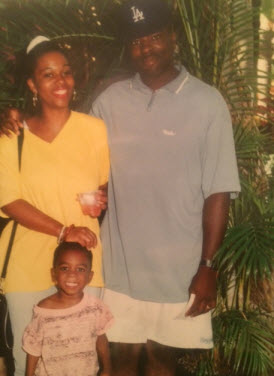
A couple months before my 20th birthday, I went on a Hawaiian vacation and came back married.
See. What had happened was, I was engaged to be married, right?
And then we started talking logistics.
Like, how many people are we gonna invite?
Where do you wanna get married?
(I’ve always wanted an outdoor wedding! And I got one! Waimea Beach Park. 10/10 would recommend)
HOW MUCH IS THIS GONNA COST?

ANYWAYS. Nesto has just gotten back from Korea (I think?) and was finally back in Hawaii.
I had never been to Hawaii and so I decided it would a great idea for me and Adam (age 2) to visit before he moved to another duty station.
And then we decided that since the gang’s all here, Let’s Get Married!
Basically I spent year twenty BBQing at Kailua Beach or at the E-Club with one other Marine Wife and 10 other Marines.
Yeah. Me at age 20 is sorta like me at age 42. Just stateside. And substitute partying at Kailua Beach/E-Club for sleeping on my couch.

Some people, though were out there doin’ shit and making history.

Take Vanessa Williams, for instance.
When SHE was 20, Miss Vanessa Lynn Williams because the First African American crowned Miss America.
Williams’ reign as Miss America was not without its challenges and controversies.
For the first time in pageant history, a reigning Miss America was the target of death threats and hate mail.
I can’t imagine WHY. I mean, she was as qualified as all of the other contestants, right? Hmmm…WHAT WAS DIFFERENT?

Ten months into her reign as Miss America, she received an anonymous phone call stating that nude photos of her taken before her pageant days had surfaced. Williams believed the photographs were private and had been destroyed; she claims she never signed a release permitting the photos to be used. After days of media frenzy and sponsors threatening to pull out of the upcoming 1985 pageant, Williams, feeling pressured by Miss America Pageant officials to resign, did so on July 23, 1984. The title subsequently went to the first runner-up, Suzette Charles, also an African American.
surprise
(There was a back-up black person on deck! I know. I’m so petty. Don’t care!)

Although she resigned from fulfilling the duties of a current Miss America, Williams was allowed to keep the bejeweled crown and scholarship money and is officially recognized by the Miss America Organization as “Miss America 1984”; Charles is recognized as “Miss America 1984-b”

She went on to do SO! MUCH! MORE! with her life. She went on to have a music career, and an acting career on stage and film/TV.
And to think this all maybe never woulda happened if someone hadn’t been trying to ruin her life over a youthful indiscretion.

Spank turns 20 this year! I can’t wait to see what her 20th year is gonna be like. I mean, aside from year 3 at BU (WTF? How is that even possible?!).
I feel like if 18 and 19 are any indication, 20 is gonna be equally memorable. I’m excited! I love watching her live her life! I’m glad I managed to get her this far, and she’s mostly taking it from here. I mean the best we can do is raise them right and not have some trigger happy racist asshole gun them down while they are minding their own business because to THEM you don’t belong and then have to justify even in death why your life matters and you deserved a chance to live it even if you ARE wearing a hoodie* hope that they get a chance to live their lives and make you proud.

*Also in people who WOULD have been 20 years old: Today is birth date of Trayvon Martin. Murdered 21 days after his birthday because post-racial America is not really past race at all.

Pretty good! Or at least she better be.

Because she’s forever at hockey games.

FOREVER.
SO I’M JUST ASSUMING THAT ALL OF HER HOMEWORK IS DONE.

She feels about hockey the way I feel about USC Football.
Yesterday she got home in the middle of the night
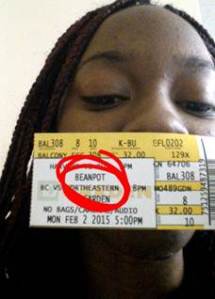
‘cause the BU v Harvard game (BEANPOT game) went into double OT.
(BU won 4-3. Go Terriers! Good dogs!)
And of course I get pics.

Spanky

‘Cause that’s my girl. (I’m kiddin’…EVERYONE KNOWS she’s daddy’s girl)

And there’s this one time THIS happened:

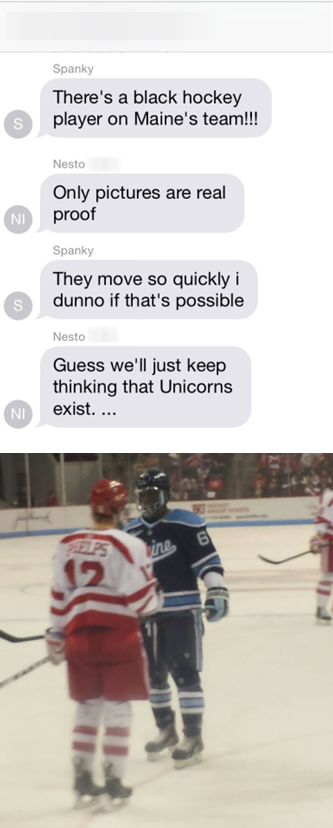
family texts
Well would you look at that. A unicorn!

Or actually, yannow. A black bear?
Well. Technically, that there is Malcolm Hayes, of the University of Maine Black Bears.
I’m sure there’s a completely inappropriate joke in there, but I’m just gonna let it be.
This time.

I know. Black people don’t like to be cold. We are a tropical people.
Or at least I am. I start falling apart around 60 degrees.
BUT. Turns out black folks been playin’ hockey as long as hockey has been around.
In Halifax, Nova Scotia, there was a black hockey league. The league, which started as an informal game among African settlers in Nova Scotia, grew into a makeshift colored league.
It wasn’t an officially sanctioned league of any kind but group of devoted black hockey enthusiasts providing entertaining games to around 1,500 mostly white folk.

One of the earliest blacks in the sport of hockey was Hipple “Hippo” Galloway. Better known as a barnstorming baseball player, Galloway was a star player on his hometown on the Central Ontario Hockey Association, as well as the local baseball team.

Galloway left his hometown in 1899 after an American import on the baseball team objected to his inclusion on the team.

In the late 1940’s, the was Herb Carnegie, star of the Quebec Senior Hockey League. Those who saw Carnegie play describe him as one of the fastest and most skilled players ever.
Carnegie should have been the first in the NHL had it not been for the “alleged prejudice” of the day.
Unlike football, baseball or basketball, the NHL never had an official policy banning blacks from playing.
But there were suspicions of an unofficial policy, especially when Toronto Maple Leaf owner Conn Smythe is said to have said, “I’ll give any man $10,000 who can make Herb Carnegie white.”

All of the side eye. ALL OF IT!

TO BE FAIR, I guess, Carnegie would get a shot at the NHL later in his career. The New York Rangers gave him a training camp tryout, and offered him a contract but they wanted him to apprentice a year in the minor leagues. Carnegie said FUUUCKTHAT and returned home to his young family in Quebec where he earned more money than he would have in the NHL. So there.

It was not until January 18, 1958 when Willie O’Ree took to the ice for the Boston Bruins (I just can’t get away from Boston, y’all) in a game against the Montreal Canadians that a black man would debut in the NHL. By doing so O’Ree ensured himself a place in hockey history as the “Jackie Robinson of hockey.” Or maybe “Willie O’Ree, First Black Hockey Player” I dunno.

ANYWAYS. To date there’s been 52 black folks who have played in the NHL.
Including Gerald Coleman- First graduate of NHL’s diversity program.

Look at us, y’all.
We outchea. Freezing our asses off.