Alllll my bosses skipped out early and I had done all I was gonna do before I spent several days not giving work a second thought, I was just here spinning around in my chair and I took a long lunch and personally hand walked things over to people that I normally woulda just scanned because OHMYGAHIAMSOFAKINGBORRRRED, but THEN I remembered that my job had been stalking me because HEY WE NEED BLOOD AND WE HEARD YOU HAVE THE GOOD SH*T AND IF YOU COULD JUST SPARE SOME WE’LL GIVE YOU A MOVIE TICKET. And generally there’s a raffle, but they were BEGGING BEGGING so strictly quid pro quo. [<- – – did you need a definition? Because I linked one here] One blood for one ticket.


Normally, I don’t have to enter a raffle when I donate ‘cause I DO in fact have that good good (blood. Although…never mind) and my blood is given to patients with particular blood disorders who can only receive blood from people with specific blood types and markers. And all I did to find this out was donate. They did all the type matching and checking for fancy stuff and then they ASKED ME if I would agree to being in this program to help patients.  That’s as specific as I can get because “Mitochondria is the power-house of the cell” is really as scientific as I can get at any given point in time. I AM NON-CLINICAL STAFF, YOU GUYS. I DON’T *HAVE* TO SCIENCE. BUT I’M *GONNA* (sorta) SCIENCE BECAUSE THAT IS THE PERFECT LEAD TO TODAY’S BHFOTD, which is…Loretta Pleasant.


SOME BACK STORY:

Loretta Pleasant was born to Eliza and Johnny Pleasant August 1, 1920. Nobody (??) seems to know when her name changed from Loretta to HENRIETTA, but did you know that Hennessy was created in 1765? *she was nicknamed Hennie. When Henrietta was 4, her mother died giving birth to her 10th (10th!!!) child and her father moved the family to Virginia where the family was distributed among family. Henrietta ended up with her grandfather, Tommy Lacks, and shared a room with her cousin/future husband David Lacks. They married and moved to Maryland in 1941.

In 1951, Henrietta Lacks went to Johns Hopkins, the only hospital in the area that treated black patients, because she felt a “knot” in her womb. She had told her cousins previously about said knot and they assumed correctly that she was pregnant. But after giving birth, things did NOT get better. She went back to Johns Hopkins where her MD took a biopsy of the mass on Lacks’ cervix and was told she had malignant epidermoid carcinoma of the cervix. [in 1970, physicians discovered they’d misdiagnosed and she had an adenocarcinoma, but this would not have changed treatment options] She was treated with radium tube inserts and discharged with instructions to return for x-ray treatments. During her treatments, two samples were taken from Lacks’ cervix WITHOUT HER PERMISSION OR KNOWLEDGE (healthy tissue/cancerous tissue) and given to George Otto Gey, an MD and cancer researcher at Johns Hopkins. The cells from the cancerous sample eventually became known as the HeLa immortal cell line, a commonly used cell line in contemporary biomedical research.

SOME SCIENCE SH*T:

George Otto Gey, the first researcher to study Lacks’s cancerous cells, observed that her cells were unique in that they reproduced at a very high rate and could be kept alive long enough to allow more in-depth examination. Lacks’s cells were the first to be observed that could be divided multiple times without dying, which is why they became known as “immortal.” Gey was able to start a cell line from Lacks’s sample by isolating one specific cell and repeatedly dividing it, meaning that the same cell could then be used for conducting many experiments. They became known as HeLa cells, because Gey’s standard method for labeling samples was to use the first two letters of the patient’s first and last names.

The ability to rapidly reproduce HeLa cells in a laboratory setting has led to many important breakthroughs in biomedical research. SUCH AS:

Jonas Salk using HeLa cells to develop the polio vaccine.

Research into cancer, AIDS, effects of radiation and toxic substances, and gene mapping.

Testing human sensitivity to tape, glue, cosmetics, etc.


ALSO:

HeLa cells were the first human cells successfully cloned in 1955.

Since the 1950s, scientists have grown as much as 50 million metric tons of her cells, and there are almost 11,000 patents involving HeLa cells.


ANYWAY. Neither Henrietta Lacks nor her family gave her physicians permission to harvest her cells. At that time, permission was neither required nor customarily sought. And I’m pretty sure this had nothing AT ALL to do with her being a black woman in the 50’s. I’ve skipped over a lot of things because this is getting long BUT. In March 2013, researchers published the DNA sequence of the genome of a strain of HeLa cells. There were objections from the Lacks family about the genetic information that was available for public access. In August 2013, an agreement was announced between the family and the NIH (National Institutes of Health) that gave the family some control over access to the cells’ DNA sequence found in the two studies along with a promise of acknowledgement in scientific papers. In addition, two family members will join the six-member committee which will regulate access to the sequence data.


Some OTHER SH*T


ON MY BORN DAY, 1996, Morehouse School of Medicine shamed Johns Hopkins held its first annual HeLa Women’s Health Conference. Led by physician Roland Pattillo, the conference is held to give recognition to Henrietta Lacks, her cell line, and “the valuable contribution made by African Americans to medical research and clinical practice” [Chile. Can’t nobody shade you like southern Black folk]. The mayor of Atlanta declared the date of the first conference, October 11, 1996, “Henrietta Lacks Day”


Some other stuff happened here, but again. This is getting long and I have things to do.


In 2010, the Johns Hopkins Institute for Clinical and Translational Research established the annual Henrietta Lacks Memorial Lecture Series to honor Henrietta Lacks and the global impact of HeLa cells on medicine and research.


AND THEN. On October 6, 2018, Johns Hopkins University announced plans to name a research building in honor of Lacks at the 9th annual Henrietta Lacks memorial Lecture surrounded by several of Lacks’ descendants. “Through her life and her immortal cells, Henrietta Lacks made an immeasurable impact on science and medicine that has touched countless lives around the world,” Daniels said. “This building will stand as a testament to her transformative impact on scientific discovery and the ethics that must undergird its pursuit. We at Johns Hopkins are profoundly grateful to the Lacks family for their partnership as we continue to learn from Mrs. Lacks’ life and to honor her enduring legacy.” The building will adjoin the Berman Institute of Bioethics’ Deering Hall, located at the corner of Ashland and Rutland Avenues and “will support programs that enhance participation and partnership with members of the community in research that can benefit the community, as well as extend the opportunities to further study and promote research ethics and community engagement in research through an expansion of the Berman Institute and its work.”


**closes Wikipedia**


And so there you have the story of how a black woman has been/is saving [what’s left of] the world.  And per usual was getting NO CREDIT. The End.


*TO BE FAIR, her great-grandpa and great-uncle were rapists slave owners so maybe it’s possible they knew what henny was? No?



Which means that y’all ain’t getting’ another fact until Monday.


I KNOW. How effing DARE me?

Short answer: I DO WHAT I WANT.

Long Answer:

Every year for the last few years I’ve been taking some time off to watch the Oscar’s Best Picture Nominated flicks with friends.

That’s right, you guys. I have friends. SURPRISE!

What does that mean exactly?

It means that instead of harassing y’all with black history facts, I’m gonna be watching movies with little to no black people

Because the Oscars continue to be SO SO WHITE. (And also very male, but I’m totally not here for this. RIGHT NOW)


BUT NEVER FEAR.

Because even though today’s BHFOTD IS about the Oscars, I still managed to find the blackest thing I could find about it.

Which is that in 1971, Isaac Hayes was the first African American to win an Oscar in a non-acting category: Best Original Song*.

He was ALSO the first person to write and perform an Oscar winning song during the televised ceremony.

What song, you ask? The “Theme from Shaft” from the blaxploitation film, um…*checks notes* Shaft.


I don’t think you can get blacker than that guys. So anyway, that’s today’s fact.

See you guys Monday with possibly ANOTHER Oscar BHFOTD if I can pull one out of all this whiteness.

Who knows?

[I know you’re thinking EYE do, but even though I keep saying Imma plan these out, I don’t, so honestly I won’t know until Monday rolls around]

But until then. Please enjoy this picture of Isaac Hayes looking like your mama’s favorite rapper. You’re welcome in advance.


[No. I am not sorry]


*I feel like there’s an inappropriate joke in there about the only other category where there are a large amount of black Oscar winners are in music (including my faves Oscar winners 3 six mafia) but *squints* I’m not gonna make it. TODAY. (Month’s not over folks. There’s a pretty good chance I’ll make it before the month is over)


And you know what that mean.

It means…I get to give y’all a gimme.


*CLEARS THROAT DRAMATICALLY*

HELLO everyone! WELCOME to Black History Month!

It’s me, Briya – your teller of ridiculous facts and whatever else I feel like telling y’all

‘cause I write the songs that make the whole world sing facts.

So please to enjoy a month of black people doing stuff because they can but then it ends up being history

because nobody wanted black people to do stuff until they did it.


ANYWAY. Back to y’all’s fact:

SO TODAY IS THE DAY AFTER THE SUPER BOWL.

AND I…didn’t watch it.

Yes it’s a political stance, NO I’m not about to knock those of y’all who watched it.

(Congrats Kansas City! I heard y’all are from Kansas* played a good game!)

And! Because I love you, I *STILL* dug up a fact from the Super Bowl 2020.


DID YOU KNOW….

That the FIRST Black person to serve as a field official in Super Bowl history was Burl Toler? In 1965?

That’s only 55 years ago! I am completely blown away.

I feel like some THINGS were happening around 1964-65 with Black people but…well.

I COULD BE WRONG.


BUT THAT AIN’T TODAY’S FACT!

‘Cause I said I was gonna dig up a fact from YESTERDAY’S SUPER BOWL.

In Two Thousand and Twenty.

And that fact is that yesterday, on the second day of Black History Month

The NFL gave to us, FIVE Black officials working the Super Bowl!

Which is the most for ANY NFL game, including The Big Game. (Honestly I just got tired of typing out SUPER BOWL)


The five African American officials that worked Sunday’s game are: line judge Carl Johnson; side judge Boris Cheek; field judge Michael Banks; back judge Greg Steed; and umpire Barry Anderson.

(I had no idea football had an umpire. The more you know.)


And that’s today’s gimme. A random black history fact for the biggest football game of the year where there are ALREADY so many black people, they added FIVE MORE.


Hope you enjoyed today’s BHFOTD! If you didn’t there’s always tomorrow!


*y’all’s (never my) president is DUMB AF.


I am SOFA KING tired you guys. Last night I went to bed at my normal hour (which, to be fair, IS EARLY. but also, I AM OLD) and I woke up around….3AM. AY. EM. And did feel like I was gonna be going back to sleep anytime soon, so I turned my TV and scrolled through the guide to see what was on and saw that Roll Bounce was on to be followed by You Got Served, which is a guilty pleasure movie for me. It’s right up there with Showgirls because honestly, who doesn’t enjoy a good ridiculous movie from time to time?

ANYWAY. I decided to watch Roll Bounce and forgot how much I really REALLY liked this movie. It’s also mildly ridiculous. Because it’s a movie about roller skating set in the 70’s. HOW CAN I NOT ENJOY THIS? ALSO. I really love roller skating. Love. Like, I own roller skates [even though it’s been a cool minute since I’ve used them]

BUT. My cousins were here a few months ago and my nephew (hi auntie’s baby!) who goes skating all the damn time invited us all out to skate with him and so off we went!

And so here we are. Is there a BHFOTD hidden in my random roller-skating rink story? Of course!

AHEM

Roller-skating was originally an entertainment for the rich. But by the end of the 1800s roller skates were being mass-produced in the US.

Roller-skating has gone through several phases of mass popularity, but it became popular again in the 1950s and then became a mass craze in the 1970s and 1980s as roller rinks became roller discos.

However, up until the 1960s most roller-skating rinks, amusement parks and swimming pools were either formally segregated or Black and Latino people were simply barred from using them. This was not confined to the Southern states where Jim Crow was in operation. In the Northern states time-honored racist practices meant amusement owners denied Black and Latino people entry into their facilities. There were always police and white racists at hand to enforce these practices. The struggle to desegregate recreation increased after the Second World War.

The campaigns took many different forms: the civil rights organization the National Association for the Advancement of Colored People (NAACP), the Congress of Industrial Organizations (CIO), Congress of Racial Equality (CORE) and the US Communist Party (CPUSA) used a combination of pickets, boycotts and legal measures to challenge segregation.

In 1938 the CPUSA organized an interracial campaign to desegregate a roller-skating rink in Brooklyn. The following year black and white catering workers’ union members in New York threatened to take the Mecca Roller Skating Palace to court when it wouldn’t sell tickets to their Black members. The management backed down and the victory was celebrated with a mass integrated roller-skate party at the Mecca. [ALL SKATE!!]

In 1942 CORE – the Congress of Racial Equality – was launched. One of its first targets was the aptly named White City roller-skating park in Chicago. When CORE’s legal challenge failed it changed tactics and organized direct action against the rink.

CORE also developed the tactic of the “stand in” – blocking the entrances so nobody could get in. The protests went on for several months and a number of activists were arrested. But they did manage to cut the attendance down by 50% – and the White City management was forced to desegregate the rink.

From the opening shots of the Montgomery bus boycott in 1955 to the passing of the Civil Rights Act of 1964, the battles to desegregate roller-skating rinks and amusement parks played an important if unrecognized role in the Civil Rights Movement.

Random fun fact!

The birth of hip hop was influenced by skating rinks. Rinks would allow dancing and skating as they provided a space for artists that found it hard to showcase their new style of Black music. Before the rest of the world knew who they were, the pioneers of rap, including Wu-Tang (see? Wu-Tang really is for the kids!), Queen Latifah, and N.W.A., got their starts performing in rinks.

The environment was so pivotal for black youth and music that gangs would call truces for skate venues [INSIDE. Please leave in an expeditious manner at the end of the night lest you get caught in the crossfire. OR SO I HEARD]


:::closes history book:::

I honestly had NO idea where I was going with this when I started this fact. And I had NO IDEA about this. The best part about digging up random things to talk to y’all about is the random things I learn when I’m doin’ it.

Anyways. That’s it. That’s my time to tell you about black stuff and black people. Tomorrow will be March and I’ll still be black which is why you’ll still get BHFOTD whenever I feel like it, or have time, or just wanna brag on black folks. Hope you enjoyed this little stroll into black excellence.

As always, anytime you’re feeling impatient for some black history knowledge stuff, google is free as fuck.

OH: One last thing! IF you are like me and just randomly curious about black culture and roller-skating shit, HBO has a documentary called United Skates. It’s On Demand!

You all haven’t been getting your facts the way I usually give them and y’all. I’m sorry. I mean, I haven’t even written a Disney is the Devil post. And those are my favorite because to be honest, they make it SO. SO. EASY. BUT. It’s been a very busy month. If it’s not vacation, it’s work. And truly. Maybe next year will be the year that I finally get my shit together and PLAN THESE OUT AHEAD.

HAHAHAHAHAHA *cough*

Anyway. Today is no different. I have a pile of work to do, and so much catching up on CURRENT EVENTS that I really just don’t have the time for a fancy lead in, so lemme just get to your BHFOTD.

:::flexes fingers and clears throat:::

William Levi Dawson, the politician (NOT the composer*) was a politician who represented Chicago, IL for more than 27 years in the US House of Representatives from 1943 to 1970.

Dawson moved to the Chicago area in 1912 to study at Northwestern University Law School. He was initiated into Alpha Phi Alpha fraternity, the first fraternity founded by and for African Americans, at Theta Chapter. He reached Chicago at the beginning of the Great Migration of hundreds of thousands of African Americans from rural areas of the South to industrial cities in the North and Midwest.

Dawson entered politics, becoming a member of the Republican Party in 1930 as a state central committeeman for the First Congressional District of Illinois until 1932. He was elected as a Democratic Representative for Illinois in 1942.

He was active in the civil rights movement of the times and sponsored registration drives. Dawson was a vocal opponent of the poll tax, which in practice was discriminatory against poorer voters. Poll taxes were among a variety of measures passed by southern states to disfranchise most black voters and tens of thousands of poor whites as well, particularly in Alabama through the 1940s.

Dawson, a member of the Democratic National Committee (DNC), had the long-term goal of increasing national black support for the party. Since the Civil War, most blacks had been allied with the Republican Party, as it had emancipated the slaves and led the movement for amendments to grant them citizenship.

NeNe laugh

[Sorry. That laugh just slipped out]

Dawson was the first African American to chair a committee in the United States Congress, when he chaired the Committee on Expenditures in Executive Departments. He served as Chair of that committee and its successor for most of the years between 1949 and 1970.

BONUS FUN FACT:

While I was looking for/up this fact, I learned that the Committee on Expenditures in the Executive Departments, has gone through a few name changes! It was created in 1927 by consolidating the 11 Committees on Expenditures previously spread among the various departments of the federal government to oversee how taxpayer monies were spent.

AND THEN. It was renamed Committee on Government Operations in 1952 and renamed AGAIN as the Committee on Government Reform. The name changed ONE MO’ GAIN to the Committee on Oversight and Government Reform.

AND THEN. The 116th Congress changed it again to its current name: the Committee on Oversight and Reform.

YES I TOTALLY ABSOLUTELY THREW THIS FACT IN FOR NO REASON. WHY DO YOU ASK?.

*And to make this long post even LONGER: William Levi Dawson, THE COMPOSER, was an African American composer, choir director, and professor specializing in black religious folk music, ALSO KNOWN AS NEGRO SPIRITUALS. And then, I fell down another wormhole that talked about how negro spirituals are typically sung in a call and response form, with a leader improvising a line of text and a chorus of singers providing a solid refrain in unison.

For instance: Is anybody praying for an impeachment?

Chorus of singers providing solid refrain: King Jesus is a listenin’   (which, by the by, is popular composition by William Levi Dawson. Composer. Not Congressman)

And that’s today’s fun fact. Stay tuned for WTF I’m gonna pull out of a rabbit’s hat to talk about on the last day of Black History Month!

GUYS. I’d just like to say that the miracle isn’t that Ruth E. Carter won for Best Costume Design. It’s that I didn’t throw a brick through my TV when The Green Book won for Best Pic AND THEN the director specifically thanks Viggo “totally didn’t mean to drop the n-word AT A PRESS SCREENING” Mortensen because without him that movie that was literally about Dr. Don Shirley could not have been made. Girl, I guess.

Also. Generally, when I’m sitting still for any period of time, I fall asleep because apparently, I’m a shark? [Not sorry!] But I guess I caught up on all my sleepin’ because I watched some of red carpet AND the actual show. Which, is awesome since the whole point of me watching all of those Oscar nominated Best Pics is so that I can sound like I know when I’m talkin’ about when I start talking out of my ass who should win. My pick.

Anyway. I am not going to let this bring me down, because SO. MANY. THINGS. TO CELEBRATE. But also so much work to do, so you know what dat mean, kids. It’s a lightening round:

  • Hannah Beachler – FIRST Black woman nominated (who also WON) Best Production Design
  • Mahershala Ali – The only other Black person (aside from Denzel Washington) to win more than one Oscar
  • Spider-Man: Into the Spider-Verse – First to ever feature a Spidey of Color (Afro-Latino Miles Morales) won for Best Animated Film
    • Side note: I can NOT say enough things about how awesome this movie is. At all. Did you see it? Go see it. Or go see it again. Really.

AND I’M REPEATING THIS ONE BECAUSE SHE DESERVES IT

  • Ruth E. Carter – FIRST Black woman to win Best Costume Design
    • Who immediately got up there and thanked Spike Lee, who gave her start by hiring her for Do the Right Thing. And Spike also won an Oscar for Best Adapted Screenplay. He was not a FIRST he was an ABOUT DAMN TIME.

And normally, I would take this time to insert some commentary about how in the 90 years that the Oscars have been in existence there are still clearly a pile of firsts to be had because #OscarsSoWhite doesn’t just mean the people on the moving picture screen, ya dig? And there are so many other black people* who will see these wins and say they got next because CLEARLY IT IS POSSIBLE.

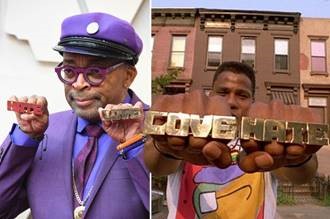
But I’m not gonna do that today. Today I’m just gonna be happy that every year, the Oscars gets a little less white and a little MORE representative of its movie going audience. And leave you with this very fancy photo of Spike Lee.

Do the Right Thing

*AND people of color, I’d be remiss if I didn’t point out how many people of color blazing trails for others to follow

**Please note: I will never say people of color when I mean BLACK. Deal.


So today for lunch I went shopping at Forever 21 (don’t ask) and guys. When they say everything old is new again, this is exactly what they mean. Like, I totally remember wearing a significant amount of these outfits as a teen in the 80’s (I AM OLDER THAN I LOOK OKAY). They had flower print leggings and bodysuits and they were playing my sissie’s favorite song  by RUN DMC and I was like WOW, TAKE ME BACK TO YE OLDE SCHOOL. I was 14 when that song came out! And I remember it well because me and my cousin used to always listen to it when we would be running the streets on our bikes doing shit that we absolutely should not be doing. Sorry, mommy! You were right, I was bad as hell.

Actually, there were TWO songs that I remember listening back to back in the summer of 1986. The other was Paul Revere by the Beastie Boys.

Which is only amusing in that I ended up eventually living in Boston and every year they would reenact Paul Revere’s ride in Lexington because of COURSE THEY DID and lemme tell you guys, I never EVER saw Adrock, M.C.A OR Mike D.

And WHY EXACTLY am I talking about white people during Black History Month? I’m not!

Today when I was driving in to work, I saw a building (the South Central Los Angeles Regional Office) and it was dedicated to Paul Revere and I was like WHAAAA? But when I actually READ the dedication, it said Paul Revere WILLIAMS. And so here is your fact:

Paul Revere Williams was an American architect based in Los Angeles, California. He became a certified architect in 1921, and the first certified African-American architect west of the Mississippi. At age 25, he won an architectural competition and three years later opened his own office. Known as an outstanding draftsman, he perfected the skill of rendering drawings “upside down.” This skill was developed because in the 1920s many of his white clients felt uncomfortable sitting directly next to a black man. He learned to draft upside down so that he could sit across the desk from his clients who would see his drafts right-side-up.

Williams designed more than 2,000 private homes, most of which were in the Hollywood Hills and the Mid-Wilshire portion of Los Angeles (including his own home in Lafayette Square, part of historic West Adams, Los Angeles, California). He designed the homes of numerous celebrities, including Frank Sinatra, Lucille Ball and Desi Arnaz, and Lon Chaney. Williams famously remarked upon the bitter irony of the fact that most of the homes he designed, and whose construction he oversaw, were on parcels whose deeds included segregation covenants barring blacks from purchasing them.

Anyway.

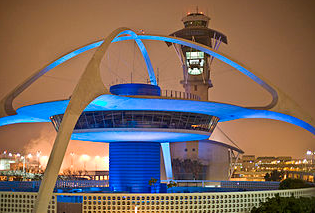
A number of his works are listed on the National Register of Historic Places. Like, yannow. This place:

LAX

I really, REALLY love my city.

A Blast from the past!

You guys! This morning I was walking to the elevator and this researcher power walks past me and rushes in and THEN tries to badge and hit her floor/close the elevator doors before I could get on. BUT. Surprise!

I held the button, so I could saunter on, and stare at her until she got off on her floor. It was an awkward (for her) trip. Every time shit like this happens I remember how much I HATE elevator riders SO. MUCH. So much that a million years ago I blogged a completely ridiculous Ode to Why I Hate People On Elevators. And I dug it up JUST FOR YOU:

*AHEM*

I hate the way that people act
to just be in your presence…
We’ve got ELEVEN other elevators banks
is time THAT much of the essence?

I hate the way that people stampede on
I can’t even get myself OFF first…
There is no freakin’ fire, people
Haven’t you heard of manners, JERKS?!

I hate the cell phone talkers
all loud with no propriety…
Don’t you know it’s not polite
to discuss your threesome among regular society?

And doctors who act like they’re alone
while they discuss their patients
You know that is against the rules…
I am not invisible, and yes, I hate you too.

I hate you, too much perfume wearer
riding in this teeny tiny crate
My eyes and nose are swelling up
Who still wears Jean Nate?!

And YOU, Mr. Crusty McSickyface here on the 6th Floor
I want to kick your ass
We’re in a mother fucking HOSPITAL…
Why didn’t you get a mask?!

Why do you have to stand so close, stranger?
All in my personal space…
It’s just you & me in this elevator
Don’t make me use my mace.

Or do we ALL have to pile in together
like some frat boys in a telephone booth…
I think somebody’s touching my ass
and I’m pretty sure I lost my shoe.

I HATE you Perv that works here
stop staring at my tits!
They do not talk, or do fancy tricks…
and I’m getting ready to lose my shit!

I hate you asshole solo rider
trying to push the button to close
I managed to get on ANYWAY
so FUCK YOU.

Yes, I know that last one didn’t rhyme at all
that doesn’t make it less true…
Instead of lowering myself to mean & angry glares
I need to find a different route

See also: Reason I Haven’t Quit My Day Job


ANYWAY. I am not a poet (obviously), BUT SHE IS: Rita Dove, First African American Poet Laureate (1993), second to receive the Pulitzer Prize for Poetry.

Dove made her formal literary debut in 1980 with the poetry collection The Yellow House on the Corner, which received praise for its sense of history combined with individual detail. The book heralded the start of long and productive career, and it also announced the distinctive style that Dove continues to develop. Poet Brenda Shaughnessy noted that “Dove is a master at transforming a public or historic element—re-envisioning a spectacle and unearthing the heartfelt, wildly original private thoughts such historic moments always contain.”

In addition to poetry, Dove has published works of fiction, and written lyrics for composers. Dove told Black American Literature Forum: “There’s no reason to subscribe authors to particular genres. I’m a writer, and I write in the form that most suits what I want to say.” Dove’s own work, the popular Thomas and Beulah, was staged as an opera by Museum for Contemporary Art in Chicago in 2001.

Rita Dove has had a tremendous impact not just through the scope of her poetry, but also through her work as an advocate. She saw her appointment as poet laureate as a mandate to generate public interest in the literary arts. She also noted in the Washington Post that her appointment was “significant in terms of the message it sends about the diversity of our culture and our literature.”

dove

  1. I stan a queen who loves herself [see shirt].
  2. And also reps other lady poets of color.
  3. See her last quote.


LONG, LONG ago you could go see ALLL the Oscars’ Best Picture nominated films in the movie theater in ONE DAY AND you could wear pajama pants, and bring in your favorite blankie/pillow and you could bring in food which was AWESOME, because what I’m NOT finna do is eat popcorn and movie theater hot dogs or somehow soggy but burnt pepperoni pizza for $25 dollars a pop, PLUS try to stretch a $20 for a 16-ounce bottle of water for 12 hours.

But then, the Powers That Be ™ voted to expand Best Picture category to a possible 10 movies, which okay, great, look at all these movies we can now nominate for Best Picture (except A Serious Man, I’ll never forgive The Academy for that movie. I’m clearly not deep enough for that movie and I am unashamed of this). THEN they extended the movie watching to TWO WHOLE DAYS of watching movies PLUS no more bringing in your own snacks, you gotta eat this same bullshit we’re feeding everybody else (unless you leave the theater, which YOU COULD DO, but still) for 12-ish hours per day because also watching two days of movies is a LOT OF FUCKING MOVIES and A LOT OF FUCKING TIME.

But this is LA, and who among us does not know a person, who knows a person, who has a friend whose cousin/sibling/best friend’s mom/partner/uncle has access to screeners or some other way to view Best Picture nominated movies? AND, why would I go to a movie theater if I can talk some friends into taking a mini vacation, renting an airBnB , and watching all of the Best Pics in my comfiest pjs/sweats from the comfort of somebody else’s couch complete with all the food and drinks you can have?

And that is how Oscar Movie Madness ™ was borned! Because I’m lazy! And cheap! (But not too cheap because DAMN DO THESE BITCHES KNOW HOW TO DRINK)

Anyway. Last year for Oscar Movie Madness, I did a WHOLE ENTIRE POST on The Black Panther and all the black history it made. But guys. This black ass movie, with all these black ass actors also became the first superhero movie to be in the running for Best Picture!

AND. THAT ISN’T EVEN THE FACT YOU GUYS. The fact is that Ruth E. Carter, costume designer, is the first Black person to be nominated for best costume design (1993: Malcolm X, 1998: Amistad, 2019: Black Panther).

That’s the fact. It only took me 421 words to get to it. But because I’ve been in and out of the office, I had more work, so I had less time to give y’all a fact BUT ALSO, the facts that y’all get after my ridiculous vacations are gimmes for the most part because i always have so much to do when I get back AND I’m more than likely tired because I NEED VACATIONS FROM MY VACATIONS.

So. While I could go on and on about Ruth E. Carter and how the first black person (woman) to win an Oscar sat at a segregated table in 1939 and 80 years later there are still black people (*cough*women*cough*) who are about to kick in other doors that have previously shut to them, I won’t. Today. Because I don’t have time. And by don’t have time, I mean that I am just WAITING to brag on her/him/whoever AS SOON AS THEY PUT THE OSCAR IN THEIR HANDS.


I started doing these at work for co-workers while I was avoiding ACTUAL work (cough. I’m certainly not doing that now. I am very productive and busy doing work things). Back before my sissie got all fancy, she’d (very) occasionally help me, so y’all would sometimes get them on days when I wasn’t workin’ away.

BUT THEN, she didn’t have time for the riff raff (aka: ME) and I was on my own*. So that means, that I do them when I have time. And my weekends are my own, so when I’m not here, neither or your facts. WOMP WOMP.

This weekend I scooted up to NorCal to hang with The Boy and see friends/go to a concert. I had some downtime/insomnia, so I also watched The Grammy’s. Which means that YES I watched Diana Ross wish herself a happy birthday.

Anyway. So ‘member when I told y’all that I never know what I’m gonna do my facts on until I start writing them? That is mostly true. Today though, I definitely decided to do a BHFOTD on Motown.

Which. Guys. Motown was originally founded by Berry Gordy Jr. as Tamla Records on January 12, 1959. So, technically, it’s Motown’s birthday (as sung by Stevie Wonder, Motown artist who was AT the 2019 Grammys)!

:::clears throat:::

Berry Gordy got his start as a songwriter for local Detroit acts such as Jackie Wilson and the Matadors. Wilson’s single “Lonely Teardrops”, written by Gordy, became a huge success, but Gordy did not feel he made as much money as he deserved from this and other singles he wrote for Wilson. He realized that the more lucrative end of the business was in producing records and owning the publishing. So, in 1959, Billy Davis and Berry Gordy’s sisters Gwen and Anna started Anna Records. Davis and Gwen Gordy wanted Berry to be the company president, but Berry wanted to strike out on his own. On January 12, 1959, he started Tamla Records, with an $800 loan from his family and royalties earned writing for Jackie Wilson.

Early Tamla/Motown artists included Mable John, Eddie Holland and Mary Wells. “Shop Around”, the Miracles’ first number 1 R&B hit, peaked at number two on the Billboard Hot 100 in 1960. It was Tamla’s first million-selling record. On April 14, 1960, Motown and Tamla Records merged into a new company called Motown Record Corporation. A year later, the Marvelettes scored Tamla’s first US number-one pop hit, “Please Mr. Postman”. By the mid-1960s, the company, with the help of songwriters and producers (Did you know that Smokey Robinson – ALSO at the 2019 Grammys – was a producer at Motown? Me either.), had become a major force in the music industry.

Motown specialized in a type of soul music it referred to with the trademark “The Motown Sound”. Crafted with an ear towards pop appeal, the Motown Sound typically used tambourines to accent the back beat, prominent and often melodic electric bass-guitar lines, distinctive melodic and chord structures, and a call-and-response singing style that originated in gospel music. In 1971, Jon Landau wrote in Rolling Stone that the sound consisted of songs with simple structures but sophisticated melodies, along with a four-beat drum pattern, regular use of horns and strings and “a trebly style of mixing that relied heavily on electronic limiting and equalizing (boosting the high range frequencies) to give the overall product a distinctive sound, particularly effective for broadcast over AM radio”

More importantly, Motown, an African American owned label featuring mostly black music, contributed to the racial integration of popular music that achieved crossover success.

:::closes Wikipedia tab:::

So anyway. Back to the Grammys. They opened with Camila Cabello (Cuban American) singing her hit single (I guess, chile. I never heard of her before Sunday) “Havana” with surprise guests Ricky Martin (Puerto Rican) and J Balvin (Columbian). Which, also, can we all talk about just how FINE Ricky Martin, remains, ooooo? No. Okay.

Image result for camila cabello grammys 2019

There was a Dolly Parton tribute! Honestly, I have always loved her. (heh. It’s still black history month y’all. Even though it’s been a dumpster fire as of late)

Image result for dolly parton grammy tribute

There was also a tiny tribute to Ms. Aretha Franklin, with Yolanda Adams, Fantasia, and Andra Day. [Something Something Full Tribute To Ms. ‘Retha Coming Soon ™]

Image result for aretha franklin grammy tribute

And I was like, WOW. Look at Recording Academy, you guys are really REALLY nailing this tribute/representation in music business! Because Honestly, Yolanda and Fantasia are probably some of the best voices to sing an Aretha Franklin song. Like, WHEW. They can SANG A SONG. (Andra Day was wearing the cutest little outfit too!)

So back to the Motown tribute. I cannot think of a better way to congratulate Motown on 60 years of black music that made bands like The Jackson 5 and Diana Ross (and the Supremes *cough*) household names, and not just “race records”, than to do a musical tribute featuring past Motown Artists and new and upcoming black artists singing the songs that made Motown famous. Like, Motown was black owned company in a time when their singers had to use the service entrance, singing black ass songs that your parents (okay, MY parents/your maybe grandparents) grew up on. This was definitely something to honor during Black History Month.

Good job, Grammys!

Image result for jennifer lopez grammy tribute 2019

[mostly black male backup dancers looking adoringly at white Latina]

Image result for jennifer lopez grammy tribute 2019

[only black woman backup singer/dancer]


*yes. I know she wasn’t on the Motown label. I don’t curr. SHE IS AN ICON. AND I CAN ADD HER WHEREVER I WANT. BUT ALSO: Michael McDonald WAS under Motown at some point, so. I still get this one.